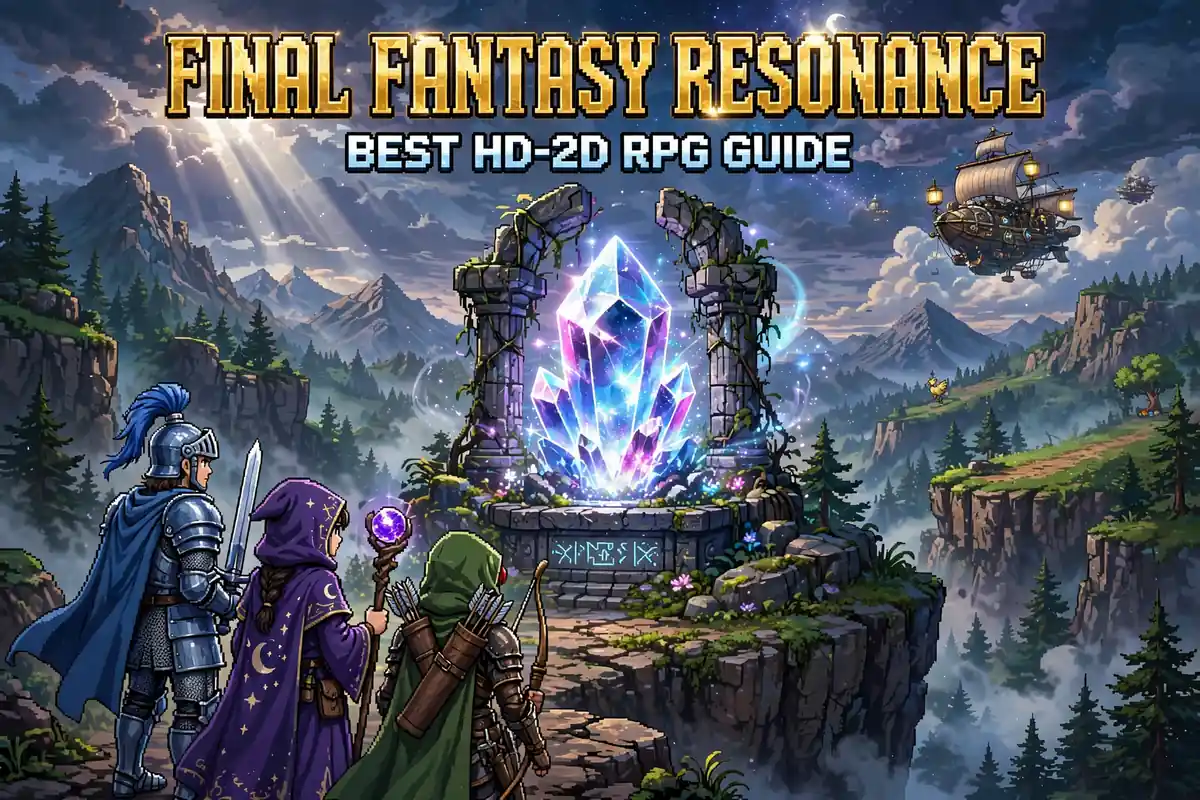
The final fantasy resonance launch is one of the biggest RPG events of October 2026, and it is easy to see why it has drawn so much attention. Final Fantasy Resonance is the first HD-2D game in the Final Fantasy series, and it brings a much-loved mobile story to consoles and PC in a completely rebuilt form. It looks like a classic Final Fantasy game, but it plays like a modern, carefully designed RPG.
This is not a numbered sequel, and it is not a simple port of a phone game either. Final Fantasy Resonance takes the first story arc of Final Fantasy Brave Exvius and rebuilds it as a full, single-purchase console RPG, with no gacha system and no stamina timer blocking your progress.
If you love classic turn-based combat, pixel art, and a tale of crystals, this guide covers everything you need to know before you start.
final fantasy resonance: Release Date, Platforms and Editions
Final Fantasy Resonance launched on October 22, 2026, on five platform families at the same time. Those platforms are PlayStation 5, Nintendo Switch 2, Nintendo Switch, Xbox Series X|S, and PC via Steam and the Microsoft Store on Windows. Square Enix announced the date during a Nintendo Direct showcase, and its launch announcement confirmed the game was available on all major platforms that day.
A free demo was released on September 3, 2026, and it covers the opening through the end of Chapter 1. Square Enix estimates the demo at around three to five hours, and demo save data carries over to the full game on all platforms. That makes the demo a genuine trial, not just a short teaser.
Editions are worth checking before you buy, because store listings can vary by region. A standard edition, a Digital Deluxe Edition with useful in-game items, and a Collector’s Edition were offered.
The Collector’s Edition includes physical items such as an art book, a soundtrack, an acrylic block set, and a Final Fantasy Trading Card Game promotional card. Prices and exact contents can differ by store and region, so check your own store page for the current listing.
What Final Fantasy Resonance Actually Is
Final Fantasy Resonance is an official Final Fantasy game, co-developed by Square Enix and Lancarse and published by Square Enix. It is not a fan project, a mod, or a rumour. It uses Unreal Engine 5, and it is the first entry in the series to use the HD-2D style, pairing pixel-art characters with dioramic 3D environments, dynamic camera angles, and dramatic lighting.
The game is based on the first story arc of the mobile game Final Fantasy Brave Exvius, set in the world of Lapis. Square Enix has been clear that final fantasy resonance is far from just a direct port. It has been refined and extensively rebuilt as a console-quality RPG, with a fully explorable world replacing the mobile game’s menu-based structure.
That rebuild is the key point for new players. You do not need to have played Final Fantasy Brave Exvius to enjoy final fantasy resonance, and you do not need to know its later seasons. The story here is self-contained, starting from the beginning of the Lapis arc.
It is also a single-player game, with no multiplayer mode and no old free-to-play systems. What remains is a paid, story-driven RPG that you can play at your own pace, with adjustable difficulty and no timed inputs in combat.
The Story: Crystals, Grandshelt and the Shattered Earth Crystal
The story of final fantasy resonance begins in the Kingdom of Grandshelt, a kingdom of knights blessed by the power of crystals. Rain, commander of an airship squadron, receives a royal decree to investigate the waning barrier of the Earth Shrine. He is joined by his childhood friend and deputy commander, Lasswell, and together they set out to find what is weakening the shrine’s protection.
Inside the Earth Shrine, they meet a mysterious man who defeats them and shatters the Earth Crystal. Returning to Grandshelt, Rain and Lasswell find their home under attack from the same man, and they manage to rescue the king before setting out again.
On their journey, they meet Fina, a mysterious girl with no memory of her past. Her search to remember who she is runs alongside the quest to protect the remaining crystals, after the attack by Veritas of the Dark sets the whole adventure in motion.
Turn-Based Combat, Stagger and Resonance Attacks
Combat in final fantasy resonance is traditional turn-based combat, shown on a clear timeline of turn order for allies and enemies. It does not use the Active Time Battle system from many older Final Fantasy games, so you can plan each move and decide when to attack, defend, or use an ability.
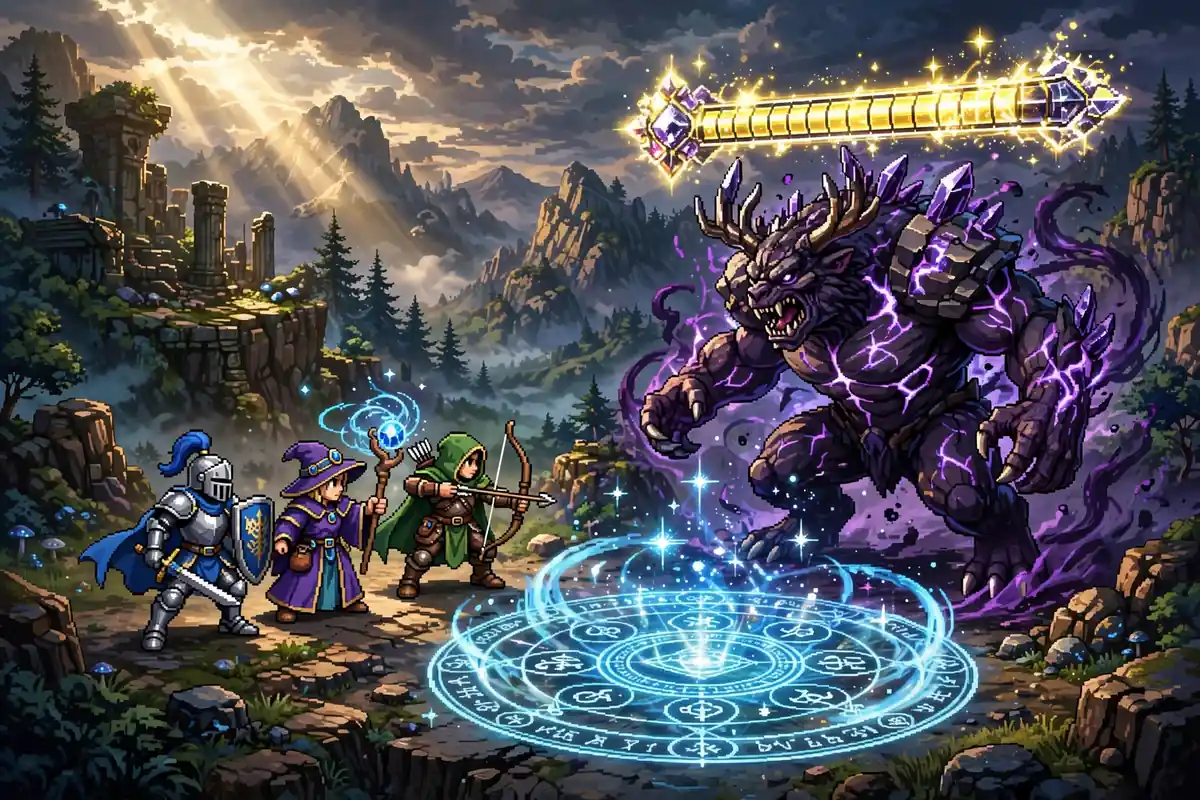
The heart of the system is the stagger gauge. Hitting enemy weaknesses depletes it more quickly, and when you stagger an enemy, you can prevent it from acting on its turn and lower its defence. The character who lands the stagger is granted an extra action at the end of the turn.
Staggering every enemy in a fight triggers a sweeping stagger, which grants all party members an extra action. That reward encourages smart targeting rather than simply attacking the nearest foe. Learning weaknesses, saving strong moves for a stagger window, and chaining extra actions together is how the best fights are won.
When a party member’s turn comes, powerful Resonance attacks can also be unleashed. These are the big, dramatic moves of final fantasy resonance combat, and they reward the same careful setup. Build the stagger, line up your party, and then spend the opening you created.
Visions: How Classic Heroes Join Your Party
Visions are one of the most talked-about systems in final fantasy resonance, and they replace the gacha pulls of the original mobile game. Visions are echoes of iconic Final Fantasy characters who fight alongside you, and they are all found by exploring the world and completing side content. There is no random draw, and no paid pull standing between you and a favourite hero.
Each Vision grants additional abilities when equipped to a party member. Cloud from Final Fantasy VII, for example, can grant enhanced physical attacks and lightning magic. Other Visions revealed in official trailers include the Warrior of Light, Tidus, Terra, and Cecil, with sixteen Visions shown ahead of launch.
Visions work like customisable skill trees for your party. Choosing which Vision to equip changes what a character can do in battle, so two players can build the same hero in very different ways.
The system also includes some famous faces as challenges rather than allies. Sephiroth, the villain of Final Fantasy VII, appears as a super-boss that players can seek out in the world, and beating him unlocks a special reward. Gilgamesh, the wandering swordmaster, also appears as side content, alongside a Colosseum, the Chamber of Arms, and a fight with Ultima Weapon.
Exploring Lapis: Towns, Dungeons, Chocobos and Airships
Exploration in final fantasy resonance is fully physical, not a list of menu nodes. You travel across the world on foot, visit towns, hunt for hidden treasure chests, and dive into secret dungeons. The HD-2D presentation makes each area look like a living diorama, with pixel-art heroes moving through detailed, three-dimensional environments.
Classic Final Fantasy touchstones return throughout the journey. Chocobos, espers, and airships are all part of the adventure, and the airship eventually becomes fully controllable. Moogles and Magitek also appear, woven into the world of Lapis.
Towns are worth exploring properly, because side content is where many Visions are found. Shrines, dungeons, and hidden areas reward players who check side paths, and the world is designed to be explored at a relaxed pace.
The score, composed by Noriyasu Agematsu, includes 120 tracks in total, with new music alongside tracks from Brave Exvius. It is one of the most praised parts of the game in early reviews, alongside the visuals and combat.

Demo, Difficulty and Starting Tips
The free demo is the best way to judge final fantasy resonance before buying, and it is available on every platform. It runs from the opening through the end of Chapter 1, which Square Enix estimates at around three to five hours. Because demo save data carries over, any progress you make in the demo continues into the full game.
Difficulty can be adjusted, and there are no timed inputs, so you can play at your own pace. That makes final fantasy resonance friendly for players who are new to turn-based RPGs, while still offering depth for veterans. If a boss is too hard, try a different Vision setup, or go back and explore for extra Visions and items first.
Starting tips from the game’s own systems are simple but useful. First, learn enemy weaknesses early, because hitting a weakness fills the stagger gauge faster than raw damage alone. Second, stagger one enemy to earn an extra action, then use it to set up a stagger on the next target.
Third, explore every town and side path before moving on, since Visions are found through exploration and side content. Fourth, save your strongest Resonance attacks for a stagger window, when the enemy cannot act and its defence is lowered.
Is Final Fantasy Resonance Worth Playing?
For players who love classic Final Fantasy, final fantasy resonance looks like a strong day-one try, especially after the free demo. Its October 22 launch on PS5, Switch 2, Switch, Xbox Series X|S, and PC gives every major platform group a way in. Its mix of HD-2D visuals, turn-based stagger combat, and a crystal tale is a clear, confident idea.
Early reviews praised the visuals, combat, and soundtrack most strongly, while the story divided some reviewers. If you play RPGs for battle systems and atmosphere, this is a very good fit, and if story is your top priority, the demo will tell you quickly whether this tale clicks for you.
For more RPG coverage on this site, start on the GameCresta homepage and try our Queen’s Domain guide for another new fantasy RPG. External details come from Square Enix, RPGamer, and Notebookcheck.
That said, this guide makes no played-experience claim about the full game beyond what launch coverage and previews report. Players should treat early impressions as a guide, not a final verdict. If the demo clicks, the full game is a sensible next step, and if it does not, there is no need to force it.
Frequently Asked Questions
What is final fantasy resonance?
Final Fantasy Resonance is the first HD-2D game in the Final Fantasy series, co-developed by Square Enix and Lancarse and published by Square Enix. It rebuilds the first story arc of the mobile game Final Fantasy Brave Exvius as a full, single-player console RPG, with no gacha system and no stamina timers.
When did final fantasy resonance release?
Final Fantasy Resonance launched on October 22, 2026, for PlayStation 5, Nintendo Switch 2, Nintendo Switch, Xbox Series X|S, and PC via Steam and the Microsoft Store on Windows. A free demo was released on September 3, 2026, covering the opening through the end of Chapter 1, with save data carrying over to the full game.
What platforms is final fantasy resonance on?
Final Fantasy Resonance is available on PS5, Nintendo Switch 2, Nintendo Switch, Xbox Series X|S, and PC via Steam and the Microsoft Store on Windows. It is also reported as Steam Deck Verified, which should help handheld PC players, although you should check the store page for the latest compatibility note.
Is final fantasy resonance a port of Brave Exvius?
No, final fantasy resonance is not a direct port of Final Fantasy Brave Exvius. Square Enix says it has been refined and extensively rebuilt as a full-fledged console-quality RPG experience, with a fully explorable world, reworked scenario and dialogue, and the old gacha system replaced by Visions found through exploration and side content.
How does combat work in final fantasy resonance?
Combat in final fantasy resonance is turn-based, shown on a timeline of turn order, and built around a stagger gauge. Hitting enemy weaknesses fills the stagger gauge faster, staggering an enemy stops it acting and lowers its defence, and staggering all enemies triggers a sweeping stagger that grants every party member an extra action.
How long is final fantasy resonance?
Final Fantasy Resonance is reported to offer a main story of around 30 to 40 hours, with up to 80 hours for completionists, according to developer details reported ahead of launch. That figure is a reported guide rather than an official runtime, so your time may vary depending on how much you explore and how many Visions and side quests you complete.
For More Updates Visits : GAME CRESTA