
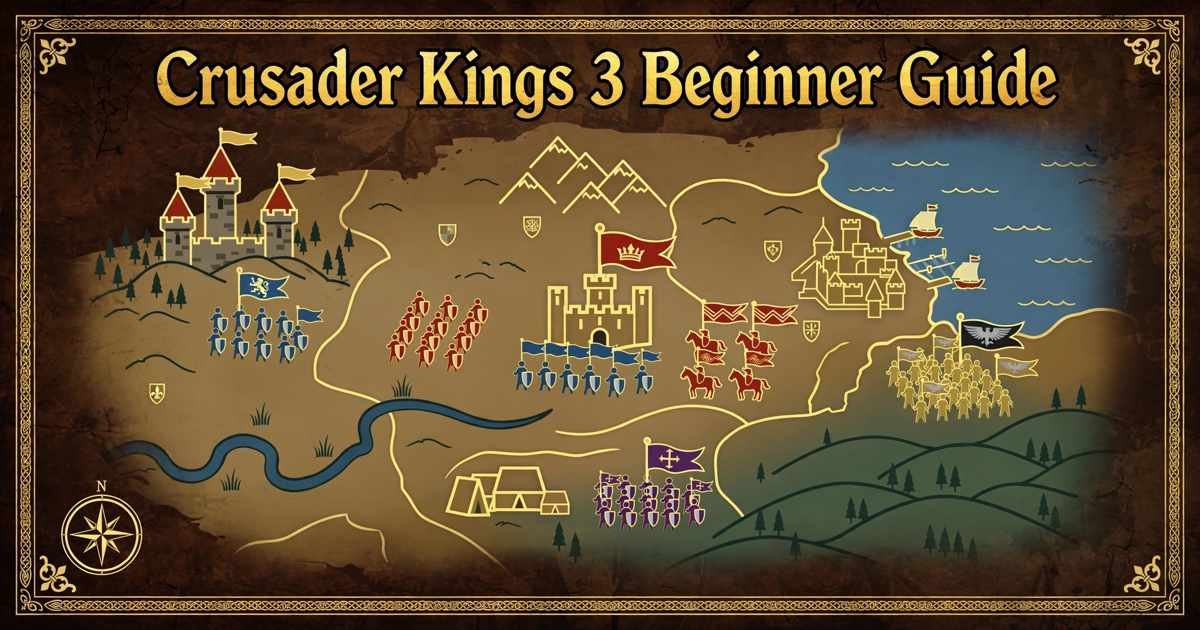
This crusader kings 3 beginner guide is for players who love a medieval dynasty simulator but feel lost on the map. Crusader Kings III, from Paradox Development Studio and Paradox Interactive, is not about painting a map one colour. You play a dynasty whose rulers die, marry, feud and inherit, while the realm keeps changing.
Scope at writing: this guide follows the base-game tutorial path in 1066 Ireland, and you do not need DLC to follow it. DLC can add extra options, so check in-game tooltips if a button looks different. See the official Crusader Kings III page from Paradox, Crusader Kings III on Steam, our Factorio Beginner Guide, and the GameCresta homepage.
Contents
SUMMARY: Use this list to jump to the 1066 Ireland start, war and claims, succession and partition, mistakes to avoid, and the FAQs.
- What Is Crusader Kings 3?
- Why Start in 1066 Ireland?
- Before You Unpause
- Your First Years in Munster
- War, Claims and Casus Belli
- Money and Your Domain
- Council, Vassals and Factions
- Succession and Partition
- Lifestyle, Marriage and Heirs
- Common Beginner Mistakes
- When to Leave Ireland
- FAQs
- Conclusion
What Is Crusader Kings 3?
SUMMARY: Crusader Kings 3 is a dynasty game, not a country game, so your goal is to keep your family in power across generations.
When your ruler dies, you continue as their heir. Titles, land, allies and grudges do not reset, and a brilliant ruler can be followed by a child with very different skills. That is why patience, marriage planning and succession planning matter as much as winning battles.
The map uses counties, duchies, kingdoms and empires. Your domain is land you hold directly, while vassals hold the rest and owe taxes and levies. Five skills shape decisions: Diplomacy, Martial, Stewardship, Intrigue and Learning. No ruler is strong at everything, so use councillors and a spouse to cover weak areas.
Why Start in 1066 Ireland?
SUMMARY: The 1066 Ireland start is ideal for beginners because it is small, relatively isolated and built around uniting Ireland.
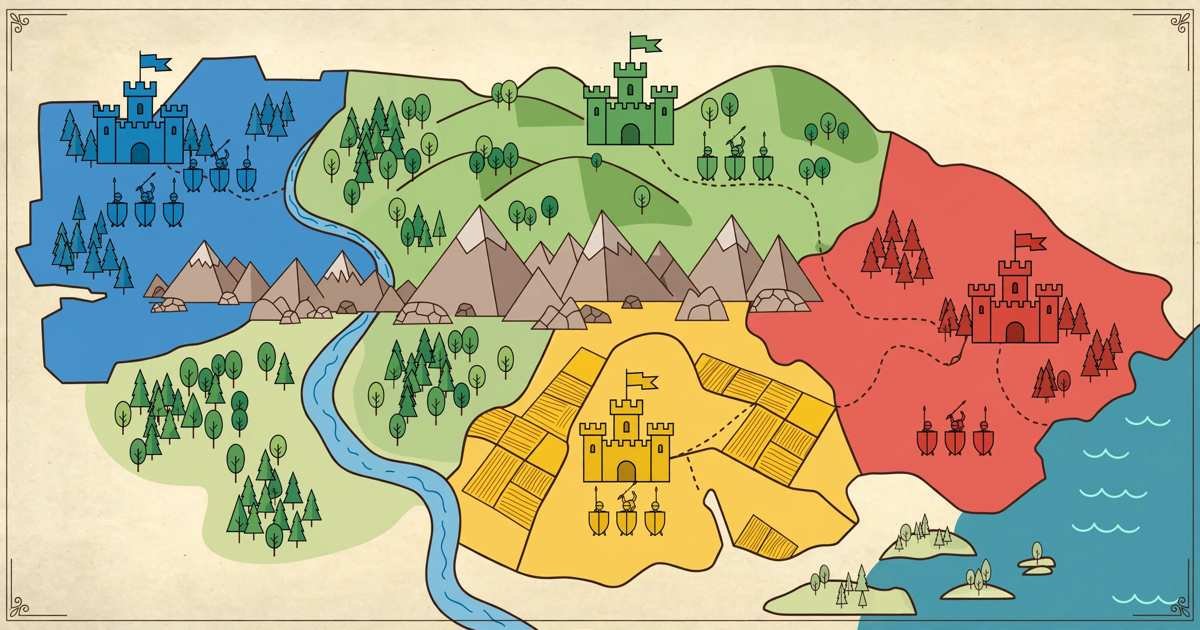
In 1066, Petty King Murchad of Munster rules a small but strong realm in southern Ireland. The tutorial uses this character, and the Paradox wiki notes that you are mostly left to yourself on Ireland, with your own autonomous Irish church and little interference from outside the island. That breathing room lets you learn war, marriage and succession without a large empire collapsing on you.
Murchad is a duke-tier ruler, called a petty king in Ireland. He has vassals and enough counties to learn domain management, but not so many that you cannot track them. Aim to hold the Duchy of Munster, then work toward the Kingdom of Ireland, but do not rush the kingdom title, because it changes succession.
Before You Unpause
SUMMARY: Do not unpause on day one; spend ten minutes checking your council, spouse, heir, claims and neighbours.
Look for warnings at the top of the screen, then open your character, council and realm panels.
| Check | What to look for | Why it matters |
|---|---|---|
| Council | Fill every seat | Empty seats waste bonuses |
| Spouse and heir | Who inherits? | Marriage can bring an alliance |
| Claims | Which titles can you press? | Claims decide useful wars |
| Neighbours | Who is stronger or allied? | A weak neighbour may have a strong ally |
| Domain | Over the limit or losing gold? | Debt and penalties weaken you fast |
Choose a lifestyle focus for your immediate problem: stewardship for income, martial for early wars, or diplomacy for vassal opinion. You can change focus later. Then assign council tasks, such as taxes, training commanders or finding secrets.
Your First Years in Munster
SUMMARY: In your first years, secure your own duchy, keep vassals content, and take one county at a time.
Try to control the duchy where your capital sits, and build in your capital county first, because those buildings benefit you directly for the whole campaign.
- Keep one war at a time and check enemy allies before declaring war.
- Raise levies close to the target, and avoid sending a small army into a larger stack.
- After a war, disband armies quickly to stop paying raised-levy costs.
- Use peace to marry children, educate heirs and improve your capital.
- Watch factions while at war, because discontent grows when you look weak.
A slower, stable Munster that survives succession is worth more than a large Ireland that shatters when your ruler dies.
War, Claims and Casus Belli
SUMMARY: You cannot simply attack anyone; you need a valid casus belli, usually a claim, and enough war score for your war goal.
A casus belli, shortened to CB, is the legal reason for war. A claim on a county or duchy is the most common beginner CB. You can gain claims through marriage, by pressing a courtier claim, or by having your court chaplain fabricate a claim on a neighbouring county. Fabrication takes time and can fail, so start it early.
Before declaring war, check the target army, target allies and your own allies. During war, occupy the war goal and fight only when you have an advantage. White peace ends a war without gains, so retreat from a clearly losing war rather than fighting to total defeat.
Money and Your Domain
SUMMARY: Gold comes mainly from your domain and vassal taxes, so build in your own counties first and stay within your domain limit.
Your domain limit is set largely by stewardship and rank. Holding more counties than the limit gives penalties, so give extra counties to vassals or raise your limit through stewardship, perks or innovations. A compact domain is easier to defend and develop.
Early buildings should match your plan: income buildings help a cash-poor ruler, while military buildings help a ruler expecting frequent wars. Upgrading your capital first is usually safest, because it stays with your primary heir in most succession setups. Keep a gold reserve for mercenaries, ransoms and sudden wars.
Council, Vassals and Factions
SUMMARY: Most internal crises are opinion crises, so keep powerful vassals on your council and watch factions before discontent turns into war.
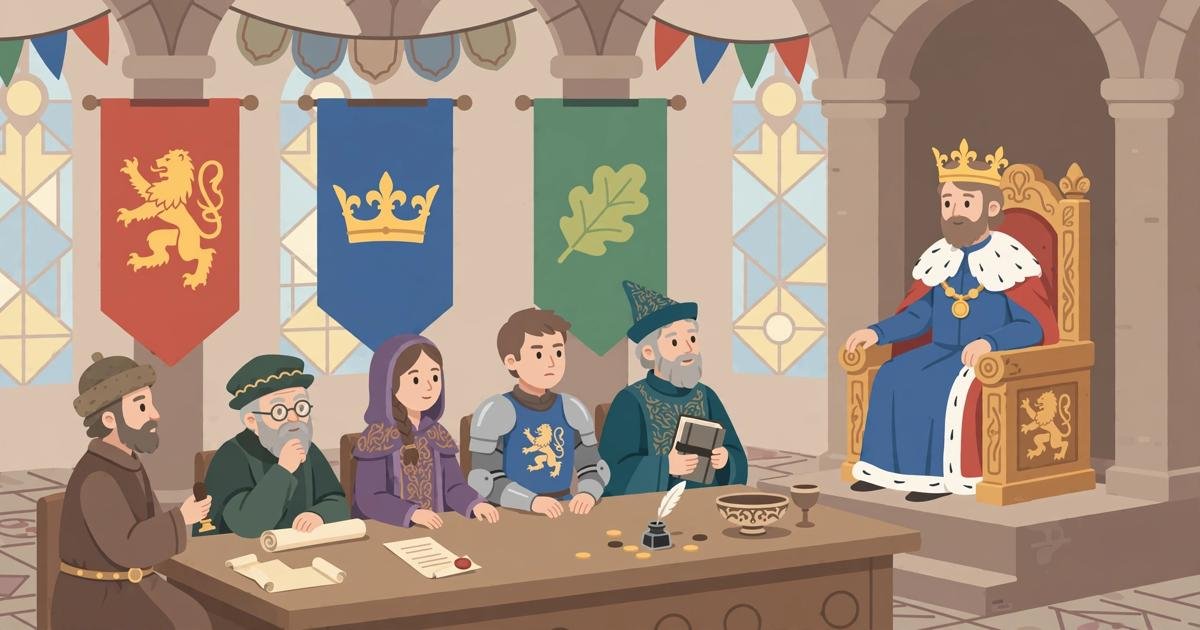
Your council has five main roles: chancellor, marshal, steward, spymaster and court chaplain. Appoint the highest-skill character available, but remember that powerful vassals expect seats. Leaving an angry, powerful vassal off the council can push them into a faction, while a seat can raise opinion and reduce that risk. Check factions after succession or a lost war.
- Sway a dangerous vassal before they join a faction, not after it is strong.
- Use gifts sparingly, because gold spent on opinion is not spent on war or buildings.
- Transfer a disloyal lower-tier vassal to a loyal higher-tier vassal where allowed.
- Marry into a powerful vassal family for a pact or alliance.
Feudal contracts set what vassals owe you. Higher taxes bring more resources but lower opinion, so avoid pushing every contract to the maximum at once.
Succession and Partition
SUMMARY: Under partition, titles are divided among eligible heirs when you die, so plan succession years in advance or your realm will split.
Partition is the default for most early feudal rulers. It does not mean you lose when your realm splits, because you continue as your primary heir, but younger heirs may become independent rulers or powerful vassals with claims on your land. Confederate partition, the earliest form, can even create new titles for heirs if enough land is available.
| Situation | Likely result | Beginner response |
|---|---|---|
| One heir, one top title | Realm stays together | Keep this setup while learning |
| Multiple heirs, one kingdom | Duchies and counties shared | Check the succession panel |
| Multiple heirs, two kingdoms | Kingdoms may split | Do not create a second kingdom early |
| Heir is a child | Faction risk rises | Build alliances and content vassals first |
Open the succession panel under the realm window and see exactly which titles each heir will receive. If the result surprises you, fix it before your ruler gets old: do not create extra top-tier titles, give land to heirs during your lifetime, or, as dynasty head, disinherit an heir at a renown cost. Later, you can move to a better succession law when your culture has the needed innovation. Do not murder family members as a first resort.
Lifestyle, Marriage and Heirs
SUMMARY: Marriage and education are long-term investments, so marry for alliances and claims, and educate heirs for the role they will fill.
Each ruler chooses one of five lifestyles, tied to Diplomacy, Martial, Stewardship, Intrigue or Learning. Focus choices give immediate bonuses and perk trees give long-term abilities, so match the lifestyle to your current problem.
Marriage can create an alliance, bring a claim into your family, or secure a strong spouse who helps manage your realm. Children are usually of the father house in a regular marriage and of the mother house in a matrilineal marriage. Choose a guardian with the education trait you want the child to gain, and keep your player heir safe: do not make a young heir a knight unless you accept the risk of death in battle.
Common Beginner Mistakes
SUMMARY: Beginners usually lose realms to over-expansion, ignored succession, empty council seats or debt, and each problem has a visible warning.
- War without checking allies: check target allies before declaring war.
- Too much land: give extra counties away or raise your domain limit.
- Ignoring succession: check the panel when you gain a title or have another child.
- Empty council seats: fill seats even with an average character for now.
- No gold reserve: keep gold for factions, ransoms and emergencies.
- Pausing too little: pause before wars and succession changes, and read tooltips.
The best habit in this crusader kings 3 beginner guide is simple: pause, read, then act. If a tooltip uses an unfamiliar term, the official CK3 Wiki beginner guide is a useful reference.
When to Leave Ireland
SUMMARY: Leave Ireland only after you hold a stable kingdom, have a clear succession plan, and can afford a war far from home.
A united, stable Ireland is a strong base. From there, look for weak neighbours, claims through marriage, or opportunities created by other wars, rather than attacking a major power because it is nearby. Before crossing the sea, check your treasury, heir, vassal opinion and whether allies will actually join.
Expansion is not the only way to grow stronger. Developing counties, building alliances and securing succession can make your dynasty more powerful without new land. A realm that survives three successions intact is already a successful beginner campaign.
FAQs
SUMMARY: These answers cover the start, succession and difficulty questions new Crusader Kings 3 players ask most often.
What is the best start in Crusader Kings 3 for beginners?
The 1066 Ireland start as Petty King Murchad of Munster is a strong choice, because it is small, relatively isolated and has a clear goal of uniting Ireland.
How does partition succession work in Crusader Kings 3?
Under partition, eligible heirs share your titles when you die, with your primary heir keeping your main title and capital. Check the succession panel before your ruler dies.
Can you lose in Crusader Kings 3?
Your campaign ends if your dynasty has no landed heir to continue, but losing land or a war does not automatically end the game. You continue as your heir and can rebuild.
Do I need DLC to play Crusader Kings 3 as a beginner?
No. The base game contains the full Munster tutorial path in this guide. DLC adds extra systems, but it is not required to learn claims, war or succession.
How long does a Crusader Kings 3 campaign take?
That depends on your speed, pausing and in-game years played. A campaign can span centuries in game, so play one ruler lifetime at a time and save often.
Is Crusader Kings 3 hard for new players?
It has a steep learning curve because it combines war, diplomacy, economy, religion, culture and family management. The Ireland start, pausing and tooltips make it manageable.
Conclusion
SUMMARY: Start small in Munster, learn one system at a time, and plan succession early, and Crusader Kings 3 becomes a rewarding dynasty story.
Your first campaign does not need to conquer the world. Unite Ireland slowly, keep vassals content, protect your heir, and check succession before major decisions. For more strategy starters, return to the GameCresta homepage.
For More Updates Visits : GAME CRESTA






One Response