Introduction
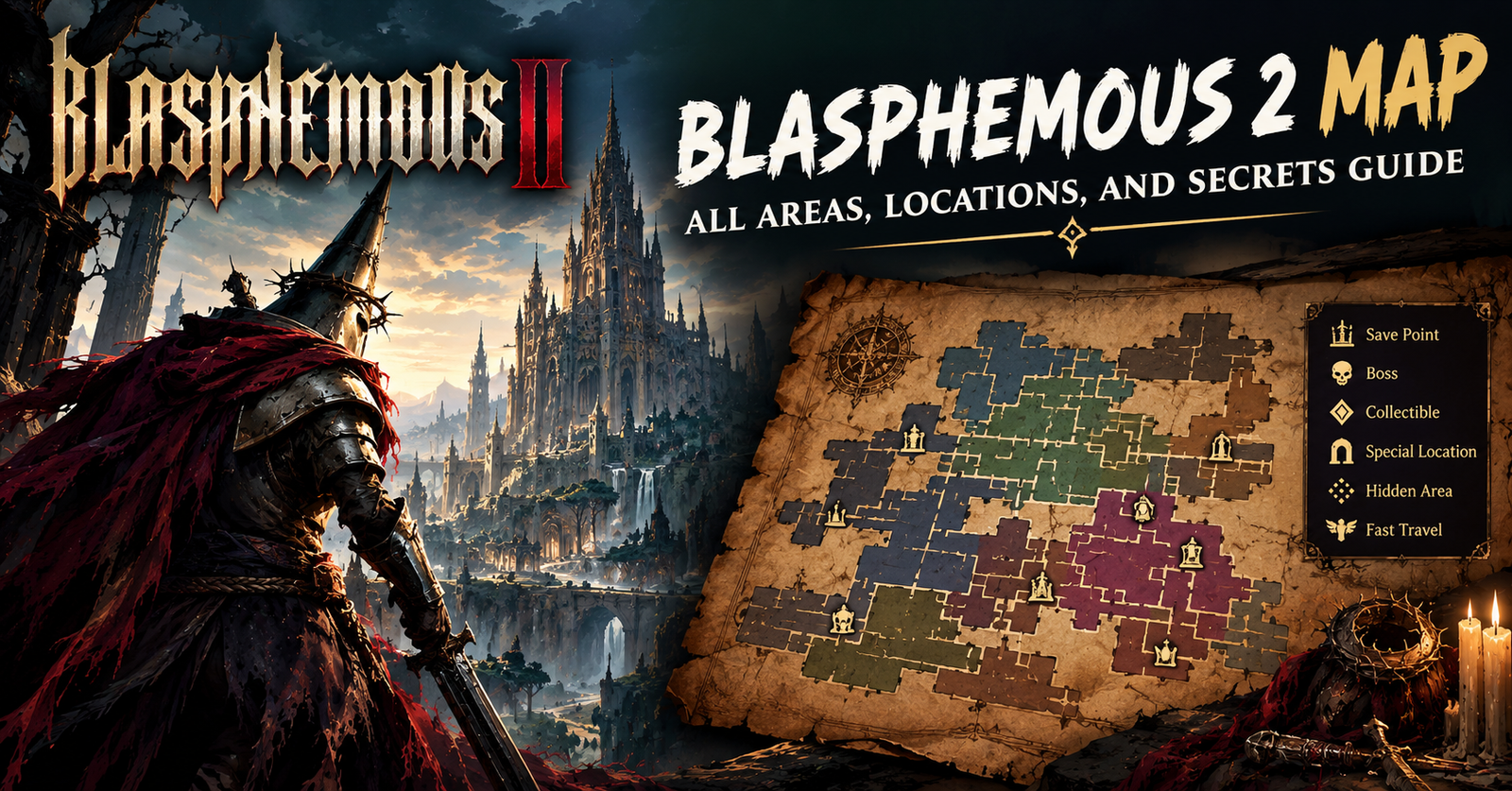
The Blasphemous 2 map is an essential tool for players exploring the dark and mysterious world of Cvstodia. With interconnected regions, hidden passages, dangerous enemies, and valuable collectibles, the game rewards players who pay attention to their surroundings. However, its winding corridors and ability-locked paths can make navigation confusing, especially when returning to previously explored areas.
Whether you are searching for a missing collectible, trying to reach a new region, or looking for a shortcut to a familiar location, understanding how the map works can make your journey much easier. The game encourages exploration rather than following a simple, linear route, so knowing where to go next is often just as important as mastering combat.
This Blasphemous 2 map guide explains the game’s major regions, useful navigation features, hidden locations, and exploration strategies. It also covers how additional content expands Cvstodia, helping both new players and returning fans navigate the world more efficiently.
What Is the Blasphemous 2 Map?
The Blasphemous 2 map represents the interconnected world of Cvstodia, a dark fantasy setting filled with religious imagery, mysterious characters, and dangerous creatures. Instead of dividing the adventure into completely separate levels, the game connects many areas through corridors, vertical passages, shortcuts, and hidden entrances.
This interconnected design is a defining feature of the Metroid Vania genre. Players gradually discover new routes and return to earlier regions after unlocking weapons, movement abilities, and other upgrades. A location that initially appears inaccessible may become reachable later in the adventure.
The map is therefore more than a navigation tool. It also helps players understand how different regions connect and identify places worth revisiting when they acquire new abilities.
All Major Areas in Blasphemous 2
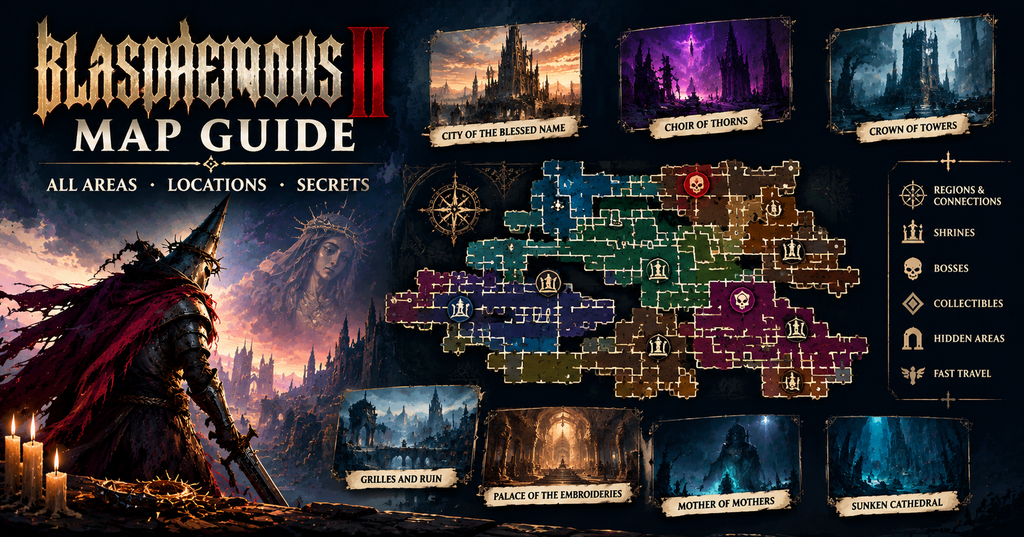
Cvstodia contains numerous named regions, each with its own atmosphere, enemies, obstacles, and secrets. Learning their names makes it easier to follow walkthroughs and understand where particular items or bosses are located.
City of the Blessed Name
The City of the Blessed Name acts as a central hub during the adventure. Players can encounter helpful characters, access services, and prepare for further exploration from this area.
Because the city connects to other important locations, it is useful to remember its entrances and available services. Returning here after exploring dangerous regions can help players manage upgrades and progress through certain character-related activities.
Grilles and Ruin
Grilles and Ruin is one of the interconnected regions surrounding the early areas of Cvstodia. Its passages and obstacles encourage careful exploration, particularly when searching for routes that connect previously visited locations.
Players should pay attention to branching corridors and suspicious sections of the environment. These details can help reveal paths that are easy to overlook during an initial playthrough.
Palace of the Embroideries
The Palace of the Embroideries introduces another distinctive environment filled with exploration opportunities. Its layout includes passages, vertical sections, and connections that can become more useful as the player unlocks additional abilities.
When navigating this area, examine both upper and lower routes rather than concentrating only on the obvious path forward. Revisiting its rooms later may reveal additional opportunities for exploration.
Choir of Thorns
Choir of Thorns is an important region that introduces challenging traversal and dangerous encounters. Its winding routes can make it difficult to identify the correct direction when several paths appear accessible.
Mapping its connections carefully can help players avoid unnecessary backtracking. Look for environmental clues and remember entrances that lead toward unexplored sections of Cvstodia.
Crown of Towers
Crown of Towers is a vertically oriented region where reaching different elevations is important for progression. Players may need to explore several routes before finding the most convenient way forward.
Movement abilities become especially useful when revisiting areas with difficult jumps or elevated platforms. If a path seems impossible during your first visit, marking its location mentally and returning later can save time.
Mother of Mothers
Mother of Mothers contains dangerous encounters and routes that connect to other important regions. Its dark atmosphere fits the game’s overall presentation, while its interconnected design rewards players who explore carefully.
As with other areas, look beyond the main route. Optional passages may contain useful items or connections that make future travel easier.
Sunken Cathedral and Two Moons
Sunken Cathedral and Two Moons are significant locations during the later stages of the adventure. Their challenging environments and progression requirements make understanding their connections particularly valuable.
Players should explore carefully, identify accessible checkpoints, and avoid rushing through unfamiliar rooms. Revisiting these locations after unlocking additional abilities may also reveal previously inaccessible paths.
How to Read and Use the Blasphemous 2 Map
Understanding the map’s basic structure can prevent unnecessary wandering. When entering a new region, explore nearby rooms first and pay attention to unexplored sections branching away from the main route.
If the map shows an incomplete passage, consider whether you have missed a doorway, a vertical route, or a connection that requires a special ability. Some obstacles cannot be bypassed until you acquire the appropriate weapon or movement upgrade.
It is also helpful to remember important landmarks, such as shrines, merchants, and entrances to neighboring areas. These locations provide reference points when navigating complicated sections of Cvstodia.
Most importantly, do not assume that every inaccessible room must be completed immediately. Blasphemous 2 is designed around gradual progression, and some routes become available only after you have explored other regions.
Hidden Rooms and Collectibles on the Blasphemous 2 Map
Exploration is particularly rewarding because many areas contain optional rooms, upgrade materials, and collectible items. These discoveries can improve your character, expand your options, or help you complete additional objectives.
Finding Hidden Passages
Pay attention to walls that look unusual compared with the surrounding environment. Some hidden rooms are concealed behind breakable surfaces or passages that are not immediately obvious.
Listen for distinctive environmental sounds and inspect suspicious corners rather than moving through every room as quickly as possible. If a corridor appears to end unexpectedly, examine the nearby walls and platforms before leaving.
Collecting Important Items
Cvstodia contains several types of collectibles, including Rosary Beads, Marks of Martyrdom, Wax Seeds, and other upgrade-related items. Their locations vary, and some require abilities or equipment that become available later.
A useful approach is to explore accessible branches thoroughly before advancing. When you find an item behind an obstacle you cannot overcome, remember its location and return when you have the required ability.
Using an Interactive Map
An interactive map can be especially useful when you want to locate a specific collectible without searching every room manually. Some community-created maps include markers for bosses, hidden passages, NPCs, upgrades, weapons, and other points of interest.
These maps can also provide filters that let you display only the categories relevant to your current objective. For example, you can focus on collectibles when completing an exploration run or show boss locations when progressing through the main story.
How Abilities Unlock New Map Areas
One of the most important mechanics in Blasphemous 2 is ability-based progression. New weapons and movement skills allow players to access routes that were previously blocked.
A platform that appears too high to reach may become accessible after obtaining an appropriate movement upgrade. Similarly, certain obstacles require a particular weapon or interaction rather than simply jumping or attacking repeatedly.
When you encounter an inaccessible route, consider whether you need a new ability instead of spending too much time attempting the same action. Returning after progressing through another region is often the intended solution.
This system also gives the map long-term value. Locations you thought were fully explored may contain additional secrets once your character becomes more capable.
Blasphemous 2 Map and DLC Areas
Additional content expands the world beyond the original adventure. The Mea Culpa expansion introduces new areas, bosses, quests, and abilities, while the free True Torment update adds further changes to existing regions and traversal.
The later free Third Psalm expansion also introduces additional areas to explore. Consequently, the exact number of named regions depends on whether you are referring to the original game or the expanded version.
Players using an older map should check whether it includes the relevant expansion content. Otherwise, some newer locations, connections, and collectibles may be missing from their reference.
For completion-focused players, an interactive map that distinguishes expansion content from the base game can make exploration considerably easier.
Tips for Exploring Cvstodia More Efficiently
A good exploration strategy combines careful navigation with patience. Rather than rushing through every new region, inspect nearby branches and remember the locations of obstacles you cannot yet overcome.
Use available checkpoints and fast-travel systems when possible to reduce unnecessary backtracking. Returning to familiar areas after gaining new abilities can also help you collect upgrades that were previously inaccessible.
Finally, choose your objective before beginning a dedicated exploration session. Searching for a specific boss, collectible, or hidden room is much easier when you know what you are looking for instead of attempting to complete every objective at once.
Conclusion
The Blasphemous 2 map is essential for understanding Cvstodia’s interconnected regions, discovering hidden passages, and finding important collectibles. Its Metroidvania design encourages players to revisit familiar locations as new weapons and abilities unlock additional routes.
By learning the major area names, recognizing suspicious walls, and using map markers to track important discoveries, you can explore more efficiently and spend less time wandering through familiar corridors. Interactive maps can also help locate bosses, upgrades, and expansion content when you need more precise guidance.
Whether you are starting your first playthrough or working toward full completion, understanding the Blasphemous 2 map will help you uncover more of the game’s secrets and make your journey through Cvstodia easier to manage.
FAQs
How Big Is the Blasphemous 2 Map?
The Blasphemous 2 map covers a large, interconnected world made up of numerous named regions, smaller passages, and hidden rooms. The exact area count depends on how minor locations and expansion content are counted. The world is designed to encourage exploration and backtracking.
How Many Areas Are in Blasphemous 2?
The original game is commonly described as having 24 named locations, including several smaller areas. Later expansions add more regions, so expanded versions of the game contain additional locations beyond the original map.
Is There an Interactive Blasphemous 2 Map?
Yes, community-created interactive maps are available for players who want to locate collectibles, bosses, upgrades, NPCs, and hidden passages. Some maps include filtering features that make it easier to focus on specific categories during exploration.
How Do You Unlock New Areas on the Blasphemous 2 Map?
New areas become accessible through story progression, weapon interactions, movement abilities, and connections discovered while exploring. If a route appears blocked, you may need to obtain another ability or progress through a different region before returning.
Where Can You Find Hidden Rooms in Blasphemous 2?
Hidden rooms can appear behind suspicious walls, concealed passages, and less obvious sections of the environment. Examine unusual surfaces, listen for environmental clues, and revisit earlier areas after obtaining new abilities to discover additional secrets.
Does the Blasphemous 2 Map Include DLC Areas?
A map that covers only the original game may not include every expansion location. The MEA Culpa expansion and later content add areas and other exploration opportunities, so players seeking full completion should use a map that supports their installed version of the game.
For More Updates Visits: GAME CRESTA