
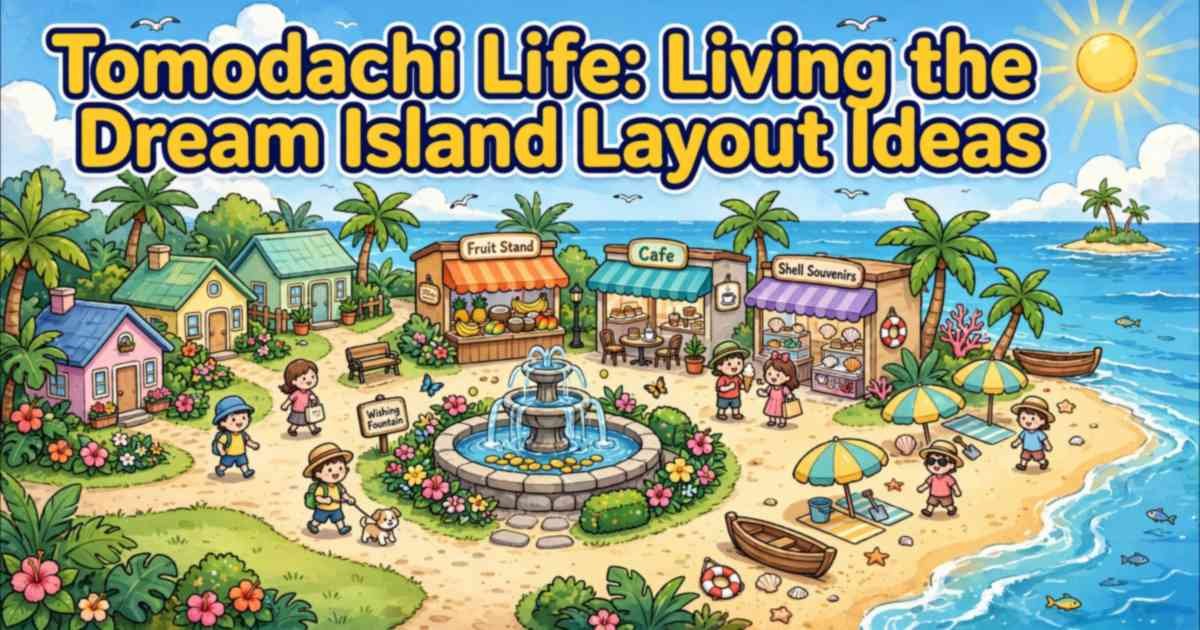
Tomodachi Life: Living the Dream Island Layout Ideas
A good Tomodachi Life island layout starts before you place a single house. Nintendo has confirmed that players can design the island, place homes, stores and restaurants, and shape the landscape. Planning a Tomodachi Life island layout first saves you from a crowded centre and long walks between shops. This Tomodachi Life island layout guide keeps facts and ideas clearly separate. Everything marked as officially announced comes from Nintendo Direct presentations or Nintendo’s official game page.
Table of Contents
- What Nintendo Has Officially Confirmed
- How the Island Works in the Game
- Start With a Centre
- Housing Zones
- Shops and Facilities
- Paths, Gardens and Decoration
- Beach, Coast and Outdoor Spaces
- Layout Ideas for Different Play Styles
- Common Mistakes to Avoid
- Frequently Asked Questions
Tomodachi Life Island Layout: What Nintendo Has Officially Confirmed
SUMMARY: Only officially announced island features are listed here, so you can plan around real features, not rumours.
Tomodachi Life: Living the Dream launched on Nintendo Switch on April 16, 2026, and it is also playable on Nintendo Switch 2. Nintendo announced the game in a Direct on March 27, 2025, showed more on September 12, 2025, and gave it a dedicated Direct on January 29, 2026. It is a simulation and lifestyle game for one player, with local wireless play for two players, and the file is 6.3 GB.
Nintendo’s official game page confirms the core layout tools. You can design your island, place homes, stores and restaurants, and shape the landscape. Miis roam freely, you can pick a Mii up and place them next to another Mii, and you can decorate homes and let Miis move in together. Before drawing any Tomodachi Life island layout, remember your island is a small island out at sea where Mii characters live carefree lives, and you are in charge of it.
How a Tomodachi Life Island Layout Works in the Game
SUMMARY: The confirmed building blocks of the island come first: free-roaming Miis, movable homes and shared houses.
The biggest change from the original 3DS game is that Miis no longer live in one apartment building. Each Mii starts in their own house, and those houses can be placed anywhere on the map, which is exactly why a Tomodachi Life island layout matters so much more this time. Distance is real now, so neighbours who share a street will cross paths far more often than Miis living at opposite ends of the island.
That freedom comes with confirmed rules worth building around. A Tomodachi Life island layout should respect the fact that Miis walk around, sit down, talk and play, so open ground between buildings is not wasted space. You can grab a Mii and move them yourself, but you cannot be everywhere at once, so a good layout creates natural meeting points.
Start Your Tomodachi Life Island Layout With a Centre
SUMMARY: Pick one central plaza as the heart of the island, and connect every other zone back to it.
Every strong Tomodachi Life island layout has one obvious centre, and the Wishing Fountain is the natural choice. It is officially confirmed, it sits well in the middle of a plaza, and it gives Miis a reason to gather. Build a small open square around it with paths leading out in three or four directions, and you have a hub that every part of the island can connect to.
From that centre, draw your main paths first and place buildings second. This is a suggestion, not a confirmed mechanic, but it follows from how the game works: Miis roam on foot, so a Tomodachi Life island layout with clear main paths will see far more chance meetings than one with no roads. Give the plaza one path to the housing area, one to the shops, one to the beach and one to a quiet garden.
Housing Zones in Your Tomodachi Life Island Layout
SUMMARY: Group houses into small neighbourhoods so Miis meet neighbours often and friendships grow naturally.
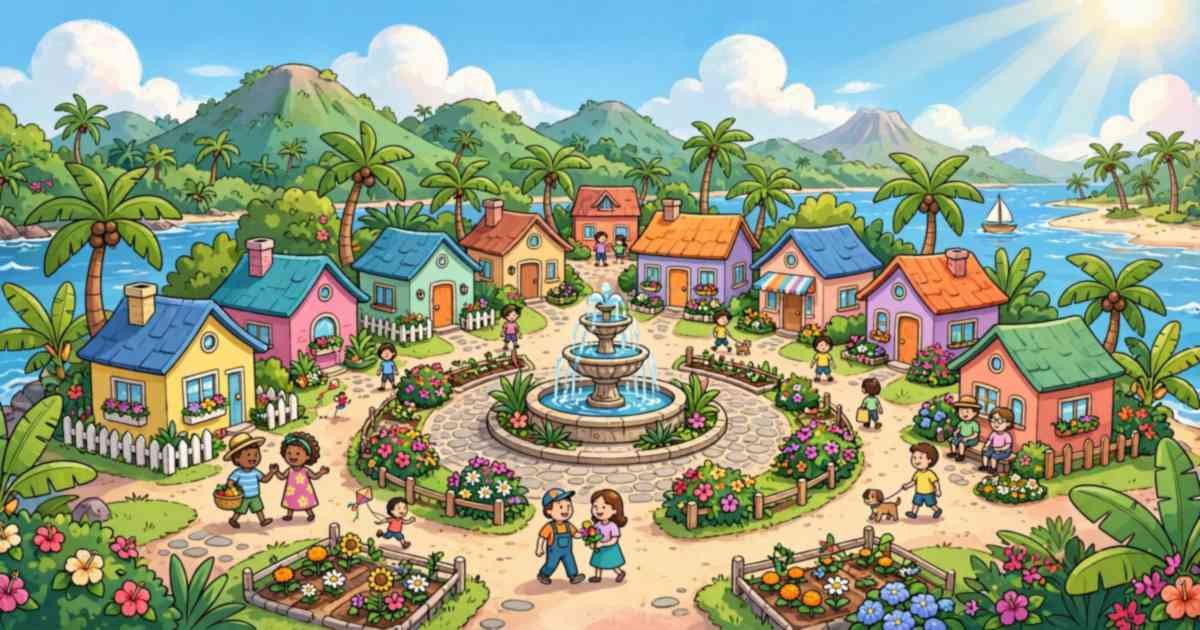
Houses work best in small clusters rather than one long row or a scattered sprawl. Idea: group three to five houses around a short shared street, with each house facing the street so Miis step outside and immediately see a neighbour. A Tomodachi Life island layout built this way creates repeat meetings between the same small group, and repeat meetings turn strangers into friends.
Think about who lives next to whom as well. This is a suggestion based on the confirmed relationship system, not a game rule. Nintendo confirms that friendships can go in all sorts of directions: Miis can become best friends, live together, have fights and hold grudges. Placing similar Miis near each other is a good idea for fast friendships, while very different neighbours are a good idea if you enjoy drama.
Shops and Facilities: Placing the Heart of the Island
SUMMARY: Place shops, food and daily services where Miis can reach them easily, so shopping streets feel lively.
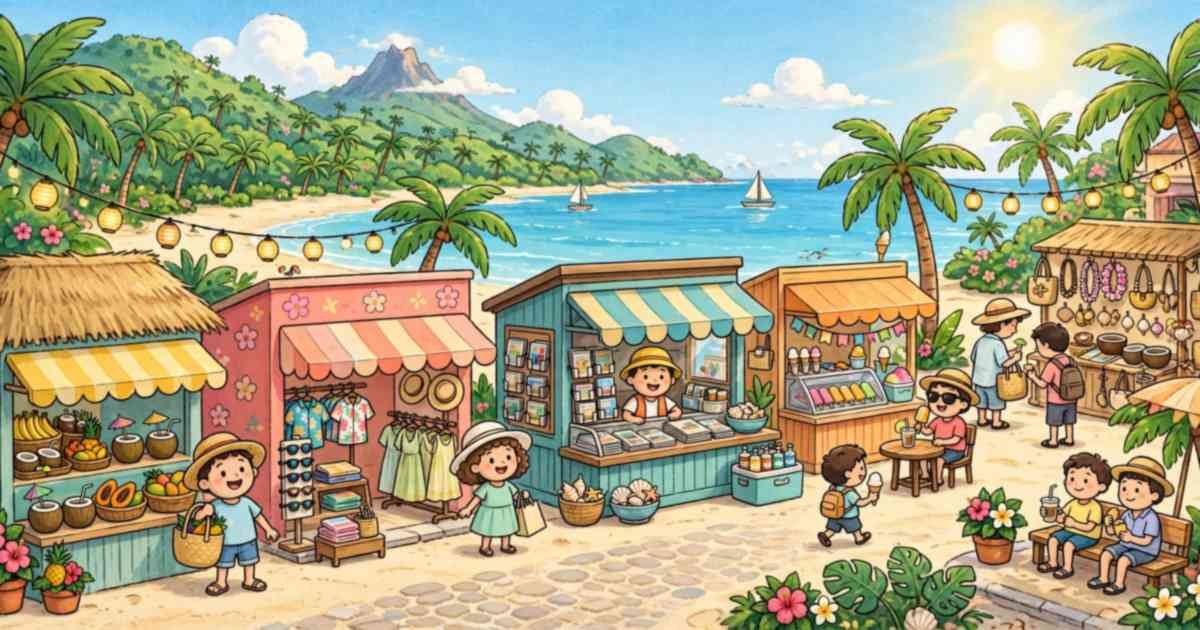
Shops are the busiest places on the island, so they belong close to the centre, not hidden at the far edge. Nintendo confirms that you can place stores and restaurants, and Direct coverage names Fresh Kingdom for food and Where and Wear for clothing, plus the MNN news station and T&C Reno for renovations. A Tomodachi Life island layout with a short shopping street off the central plaza gives every Mii a quick trip for food, clothes and gifts.
Place facilities where their purpose makes sense. The Wishing Fountain already anchors the centre, and the news station fits beside it, since MiiNews is the island’s daily source of news. Idea: put renovation and decoration services, such as the reported T&C Reno, Quik Build and Palette House tools, near the housing zones instead, because that is where you will use them most.
Paths, Gardens and Decoration Ideas
SUMMARY: Paths, fences, plants and patterns can turn empty grass into streets, gardens and personal spaces.
Paths are the cheapest and most useful decoration on the island. The game confirms that you can place decorations such as fences and plants, and Direct coverage links those tools to Quik Build, so a Tomodachi Life island layout can use paths to mark out streets and gardens without building anything new. Idea: use one path style for main roads and a narrower path for small residential streets.
Gardens work best as small, personal spaces rather than one huge park. Idea: give each housing cluster in your Tomodachi Life island layout a shared garden with a few flowers, a bench and a tree. A Tomodachi Life island layout with several small gardens gives Miis many places to sit and talk, while one giant park often ends up empty because it is too far from where anyone lives.
Beach, Coast and Outdoor Spaces
SUMMARY: Use the beach and coastline as a relaxation zone, and place only a few things there.
The beach is the island’s natural relaxation zone, and it deserves its own character. Nintendo’s official description calls the setting a small island floating in the sea, so a Tomodachi Life island layout should treat the coast as a destination rather than leftover space. Idea: keep the main beach open with a few umbrellas and deck chairs, plus a clear path from the centre, so Miis can wander down to the sea easily.
Outdoor activities give the coast a purpose beyond looking pretty. Miis have been shown outdoors digging, playing music, exercising and relaxing, and Nintendo confirms that players can create items and place them for Miis to use. Idea: place a small number of outdoor items along the beach in your Tomodachi Life island layout, such as a bench, a musical spot or a play area, and leave gaps so Miis can gather in small groups.
Tomodachi Life Island Layout Ideas for Different Play Styles
SUMMARY: Three ready-made tomodachi life living the dream island layout styles follow: storyteller, collector and relaxed observer.
Not every player wants the same island, so here are three Tomodachi Life island layout styles built from the same confirmed tools. The social storyteller style puts housing in tight clusters around the central plaza, with shops one short street away and the beach as a second meeting spot. Idea: keep distances short everywhere, because this style is about Miis meeting often and forming friendships.
The collector and decorator style is for players who enjoy creating things. Nintendo confirms that you can create pets, food, clothing and items such as books and video games, and exchange anything you make with other players via local wireless. A Tomodachi Life island layout for a collector needs spare open ground more than anything else, because new ideas need somewhere to go.
| Play style | Centre | Housing | Best for |
|---|---|---|---|
| Social storyteller | Fountain plaza | Tight clusters | Friendships and drama |
| Collector and decorator | Creative quarter | Near shops | Creating and showing items |
| Relaxed observer | Small plaza, big garden | One cluster | Daily check-ins |
Common Tomodachi Life Island Layout Mistakes to Avoid
SUMMARY: The most common layout mistakes, from overcrowding the centre to scattering houses too far apart.
The most common mistake is filling the centre with decorations before any Miis arrive. A Tomodachi Life island layout needs open ground in the middle more than it needs fences and flower beds, because the centre is where Miis gather.
The second mistake is placing houses too far apart. Scattered houses look tidy on a map, but they quietly stop friendships from forming, because Miis who never cross paths never become friends. A Tomodachi Life island layout with houses in clusters of three to five works better than the same houses spread across the whole island.
Frequently Asked Questions
SUMMARY: Answers to the most common island-planning questions, using confirmed features and labelled suggestions.
What is a good Tomodachi Life island layout for beginners?
A good Tomodachi Life island layout for beginners is a small central plaza with the Wishing Fountain, one housing cluster nearby and a short shopping street. Keep paths clear, leave open grass for growth, and add decorations slowly.
Can you move houses and shops after placing them in Tomodachi Life: Living the Dream?
Nintendo confirms that you can place homes, stores and restaurants and shape the landscape, but the official store page does not spell out every rule for moving a building once it is placed. Check the in-game options before planning a big move.
How many Miis can live on the island?
Direct coverage reports that a maximum of 70 Miis can live on the island at once, and up to eight Miis can share one house. We could not verify those exact numbers on Nintendo’s official store page, so treat them as reported Direct details. Even so, a Tomodachi Life island layout should leave room to grow.
What shops are confirmed for the island?
Nintendo’s official page confirms stores, restaurants and the MiiNews station, plus the Wishing Fountain. Direct coverage also names Fresh Kingdom as a food store, Where and Wear as a clothing boutique, and T&C Reno, Quik Build and Palette House as renovation and decoration services. Check the names in your own game.
Does the island layout affect friendships in Tomodachi Life: Living the Dream?
The layout affects friendships indirectly, because Miis meet by roaming the island and you can place Miis next to each other to start a chat. Nintendo confirms that friendships can grow into best friendships, living together or even romance. A Tomodachi Life island layout with close houses and crossing paths creates more meetings.
Is there a demo to try an island layout before buying the game?
Yes. The Welcome Edition demo is available on Nintendo eShop, lets you create up to three Mii characters, and your save data carries over to the main game if you buy it. Completing the demo also gives you a Hamster Costume for your Mii characters, which is also available in the main game through regular play.
A great Tomodachi Life island layout is not the biggest or the busiest island. It is the one where Miis meet often, shops are easy to reach, and there is still open space to grow. Start with a clear centre, cluster your houses and keep the shops close. For more Nintendo Switch guides, visit the GameCresta homepage, and see our Joy-Con drift fix guide and Pikmin 4 Switch 2 Edition Dandori Academy guide.
For More Updates Visits: GAME CRESTA







One Response