
Introduction
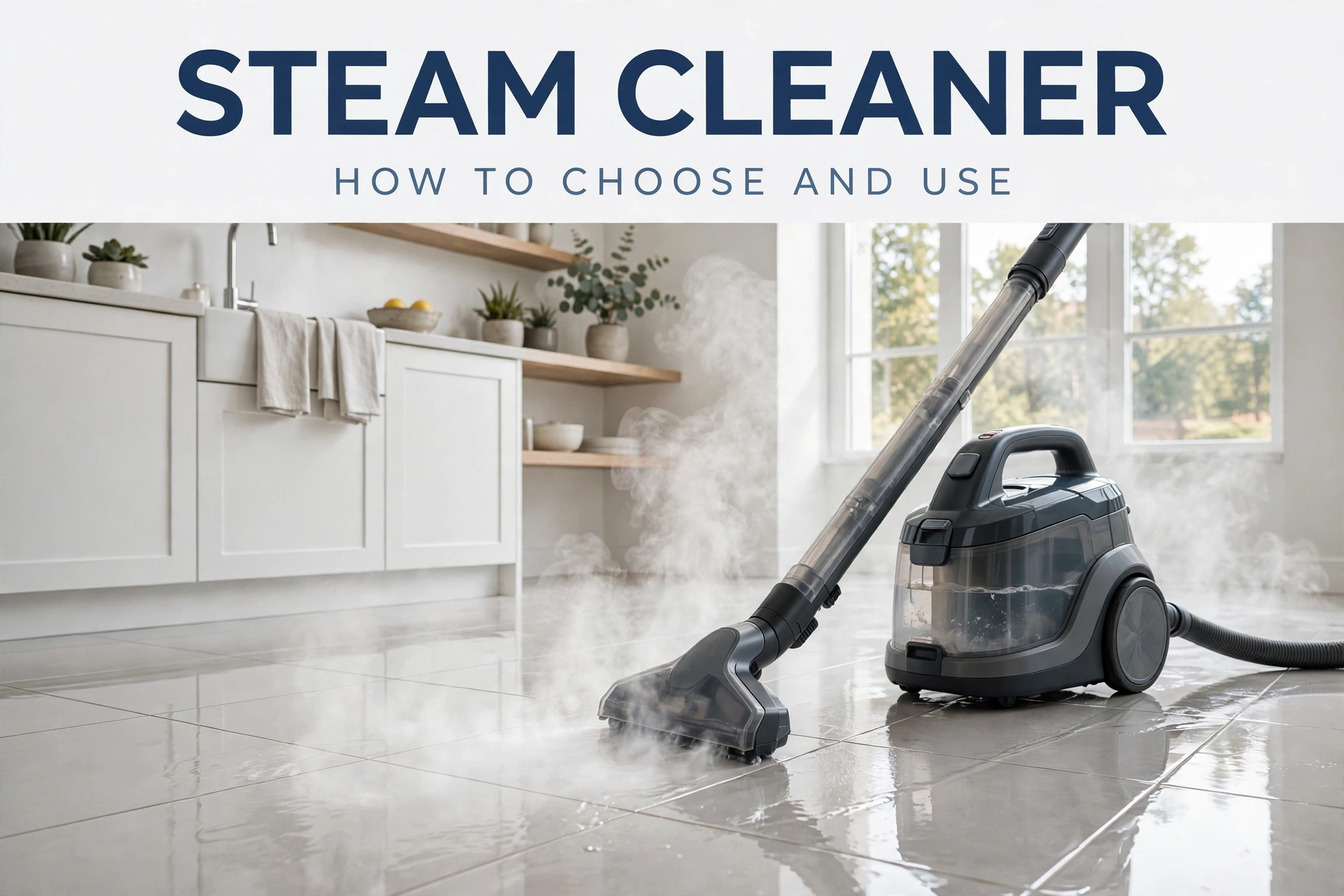
A steam cleaner is one of the simplest tools for deep cleaning without relying on strong chemicals, because it uses heated water vapour to loosen dirt, grease and grime. Instead of pushing dirty water around a floor, a steam cleaner heats water to 212 degrees Fahrenheit or higher, turns it into pressurised vapour, and directs that vapour onto a surface where heat and moisture do the work. That makes it useful for sealed tile floors, grout lines, kitchen surfaces, bathroom fixtures and some upholstery, although it is not the right tool for every surface in a home. This steam cleaner guide explains how these machines work, the main types available, where they perform best, where they fall short, and what to check before buying one, so you can choose a model that fits your home rather than the most powerful machine on the shelf.
How A Steam Cleaner Works
A steam cleaner works by heating water in a small boiler or tank until it becomes steam, then releasing that steam through a nozzle, mop head or brush. The high temperature softens grease, soap scum and dried dirt, while the pressure helps lift it from cracks, grout lines and textured surfaces, and a cloth pad or brush then wipes the loosened dirt away. Because the main cleaning agent is water, most steam cleaning needs little or no detergent, which is helpful in homes with children or pets and for people who want to reduce chemical sprays. Steam temperature and pressure matter more than marketing claims, because a weak, lukewarm jet will only dampen a surface, while a hotter, higher-pressure jet can cut through baked-on kitchen film and stained grout. For general home use, look for a model that reaches at least 220 degrees Fahrenheit and offers adjustable steam output, so you can use a gentle pass on sealed wood and a stronger pass on tile and grout.
The Main Types Of Steam Cleaner
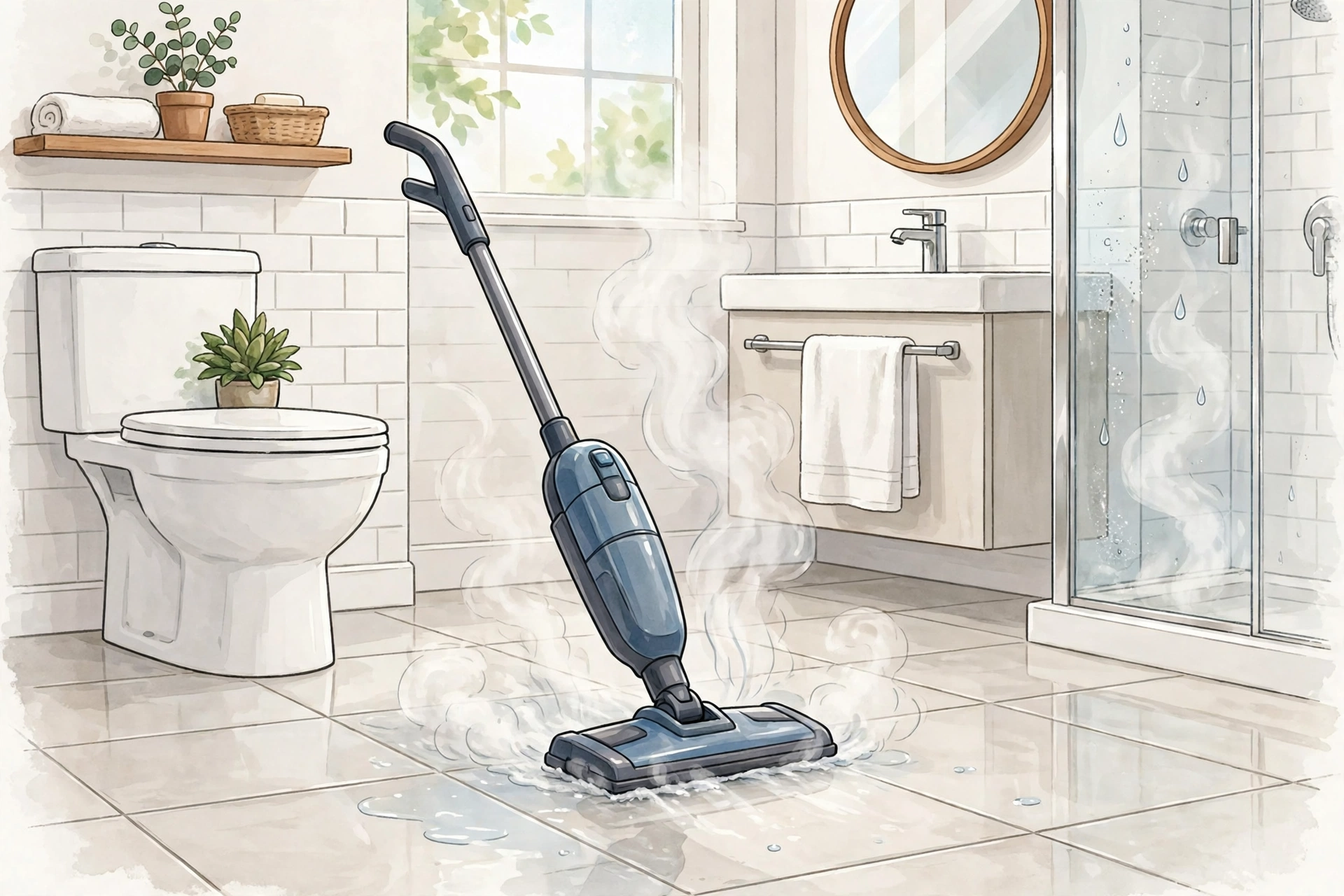
Steam mops are the simplest type, with a tank, heating element and flat head on a stick, and they are designed mainly for hard floors. They heat up quickly, often in about 30 seconds, weigh roughly five to eight pounds, and run for about 15 to 25 minutes on a 12 to 20 ounce tank, which is enough for a kitchen or bathroom floor but not for a whole house. Canister or cylinder steam cleaners are larger, with a wheeled boiler, a hose and many attachments, and they are the most versatile type for whole-home cleaning. They take longer to heat, often eight to twelve minutes, but they offer bigger tanks, hotter steam and tools for grout, ovens, window frames, upholstery and car interiors. Handheld steam cleaners are small, pistol-shaped units for spot jobs such as taps, hobs, grout lines and small tiles, with a tiny tank that lasts only five to ten minutes, so they work best as a second tool rather than a main cleaner. A two-in-one steam mop, with a detachable handheld unit, sits between these options, giving floor cleaning plus light above-floor work without the size or cost of a full canister model.
Best Uses Around The Home
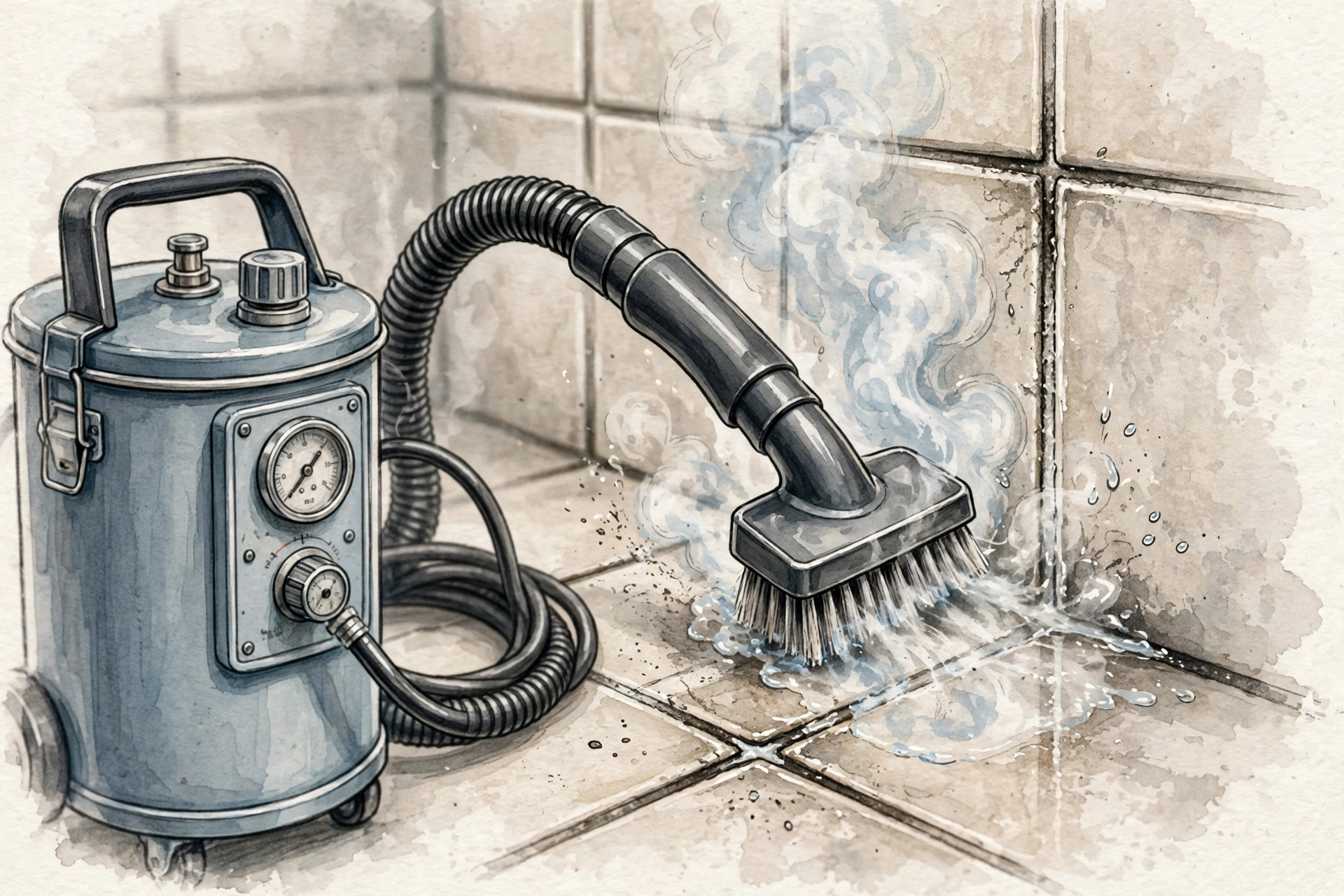
Steam cleaners earn their keep most clearly on tile and grout, because grout traps dirt, mould and soap scum in narrow channels that a normal mop cannot reach. A concentrated nozzle or grout brush, used slowly along a grout line, can lift years of discolouration without harsh scrubbing that wears grout down. Sealed hard floors, including tile, vinyl, laminate and sealed stone, also respond well when moisture is controlled and the mop head is kept moving. In kitchens, steam helps dissolve grease on stovetops, range hoods and backsplashes, while in bathrooms it softens soap scum and mineral deposits on tiles and fixtures. Upholstered furniture, mattresses and fabric car seats can benefit too, with a fabric attachment and light, even passes that do not soak the fabric. The key habit is to work in small sections, let the steam dwell for a few seconds, and wipe up the loosened dirt, rather than flooding a surface and hoping the heat alone will finish the job.
Where A Steam Cleaner Falls Short
A steam cleaner is not a universal cleaner, and knowing its limits prevents disappointment. It should not be used on unsealed wood, damaged finishes, thin-veneer engineered flooring, or any surface that is sensitive to heat or moisture, because steam can warp, swell or strip a weak finish. Carpets are another weak area, because a steam cleaner is not a carpet extractor and can leave moisture that encourages mould if it is overused. Windows can streak, heavily soiled ovens or range hoods full of old fat may still need a degreaser first, and steam finishes that job rather than starting it. Leather and suede need extra care, with a low setting and a hidden test patch first, and delicate fabrics should never be soaked. Always check the manufacturer’s guidance for your floor and furniture, test a small hidden area first, and keep the nozzle moving, because holding steam in one spot for too long is the most common way to damage a surface.
What To Check Before Buying
Before buying a steam cleaner, start with your main job, not the biggest specification. If you only clean floors, a steam mop is lighter, cheaper and easier to store, while if you want grout, ovens and upholstery as well, a canister model with at least three bar of pressure is a better investment. Check tank size and refill style, because a fixed tank must cool and depressurise before refilling, while a continuous-refill model lets you top up while steaming. Look at attachments, because a steam cleaner is only as versatile as its tools, and the essentials are a floor nozzle, a hand nozzle, a round brush and a detail nozzle, with a squeegee and fabric nozzle as useful extras. Consider heat-up time, weight, cord length, storage space and descaling needs, especially if you have hard tap water, because mineral build-up can reduce steam pressure over time and distilled water can extend the time between descaling. Finally, check warranty and safety features, and for any model with a known safety recall or replacement part, confirm the fix is installed before use.
How To Use A Steam Cleaner Safely
Safe steam cleaning starts before you switch the machine on. Fill the tank with water as directed, attach the right tool for the surface, and let the unit reach full pressure before you start, because a half-heated jet will only wet dirt. Work in small sections, hold the nozzle a short distance from the surface, and move slowly, allowing two to five seconds of steam on most spots and a little longer only for baked-on grease or thick mineral build-up. Wipe up loosened dirt with a clean cloth or pad, change pads when they become dirty, and empty the tank after use so stagnant water does not sit in the boiler. Keep hands, feet and pets away from the steam jet, never point it at yourself or at electrical outlets, and let the machine cool before opening a pressurised tank. After cleaning, rinse pads, clean nozzles and brushes, and descale regularly if you have hard water, because a well-maintained steam cleaner keeps its pressure and lasts far longer than one that is stored dirty.
Conclusion
A steam cleaner is best understood as a heat-powered deep cleaner, not a replacement for every cleaning product in a home. Choose a steam mop for quick floor cleaning, a canister model for whole-home grout, oven and upholstery work, and a handheld unit only for spot jobs, and match steam temperature, pressure, tank size and attachments to the job you will actually do most often. Use it slowly, in small sections, on surfaces that can handle heat and moisture, and respect its limits on unsealed wood, delicate fabrics and heavily soiled grease. Done that way, a steam cleaner can restore grout, refresh sealed floors, cut kitchen grease and reduce chemical sprays, all with little more than water and heat. That combination of simple operation and deep results is why steam cleaners remain a practical choice for many households, even as newer floor tools arrive.
What is a steam cleaner used for?
A steam cleaner is used for deep cleaning sealed hard floors, tile and grout, kitchen surfaces, bathroom fixtures, windows and some upholstery, using heated water vapour to loosen dirt, grease, soap scum and bacteria without strong chemicals. It works best where heat can soften grime in cracks and textured surfaces, such as grout lines, stovetops and shower tiles, and it is less suited to unsealed wood, delicate fabrics and carpet extraction.
Can a steam cleaner kill germs?
Steam at 212 degrees Fahrenheit or higher can kill many common germs and bacteria on contact, and steam mops are often described as sanitising sealed hard floors, but results depend on temperature, dwell time and surface type. A quick, cool pass is not the same as a hot, slow pass, so follow the manufacturer’s guidance, allow steam to dwell for a few seconds, and do not assume every surface is disinfected after a single wipe.
Is a steam cleaner safe for hardwood floors?
A steam cleaner is safe only for well-sealed hardwood in good condition, using a dry-steam setting, quick passes and no standing moisture, and it should be avoided on unsealed wood, damaged finishes or thin-veneer engineered flooring. Always test a hidden spot first, keep the mop moving, and stop if the wood feels very wet or the finish looks cloudy, because excess moisture can warp or damage wood.
What is the difference between a steam mop and a canister steam cleaner?
A steam mop is a lightweight, floor-only tool that heats quickly and is easy to store, while a canister steam cleaner is a larger wheeled unit with a hose and many attachments for grout, ovens, windows, upholstery and car interiors. Steam mops are better for quick, regular floor cleaning, while canister models are more powerful, more versatile and better for deep, whole-home cleaning, at the cost of size, weight and heat-up time.
Do you need detergent with a steam cleaner?
In most cases you do not need detergent, because heat and pressure do most of the work, and many manufacturers recommend water only for steam cleaning. Detergent can help with heavily soiled grease as a first step, but it should not be added to a boiler unless the manufacturer specifically allows it, because the wrong product can damage seals, leave residue or reduce steam output.
How do you maintain a steam cleaner?
Maintain a steam cleaner by emptying the tank after use, cleaning nozzles, brushes and pads, checking seals and pads for wear, and descaling regularly if you have hard water, typically every one to two months or as the manual directs. Using distilled or filtered water can reduce mineral build-up, and storing the machine clean and dry helps preserve steam pressure and extend its life.
For More Updates Visits : GAME CRESTA